
Romanesque Church · Corsignano · Just Below Pienza
Pieve di Corsignano
Where Pius II was baptised — and silence belongs to everyone
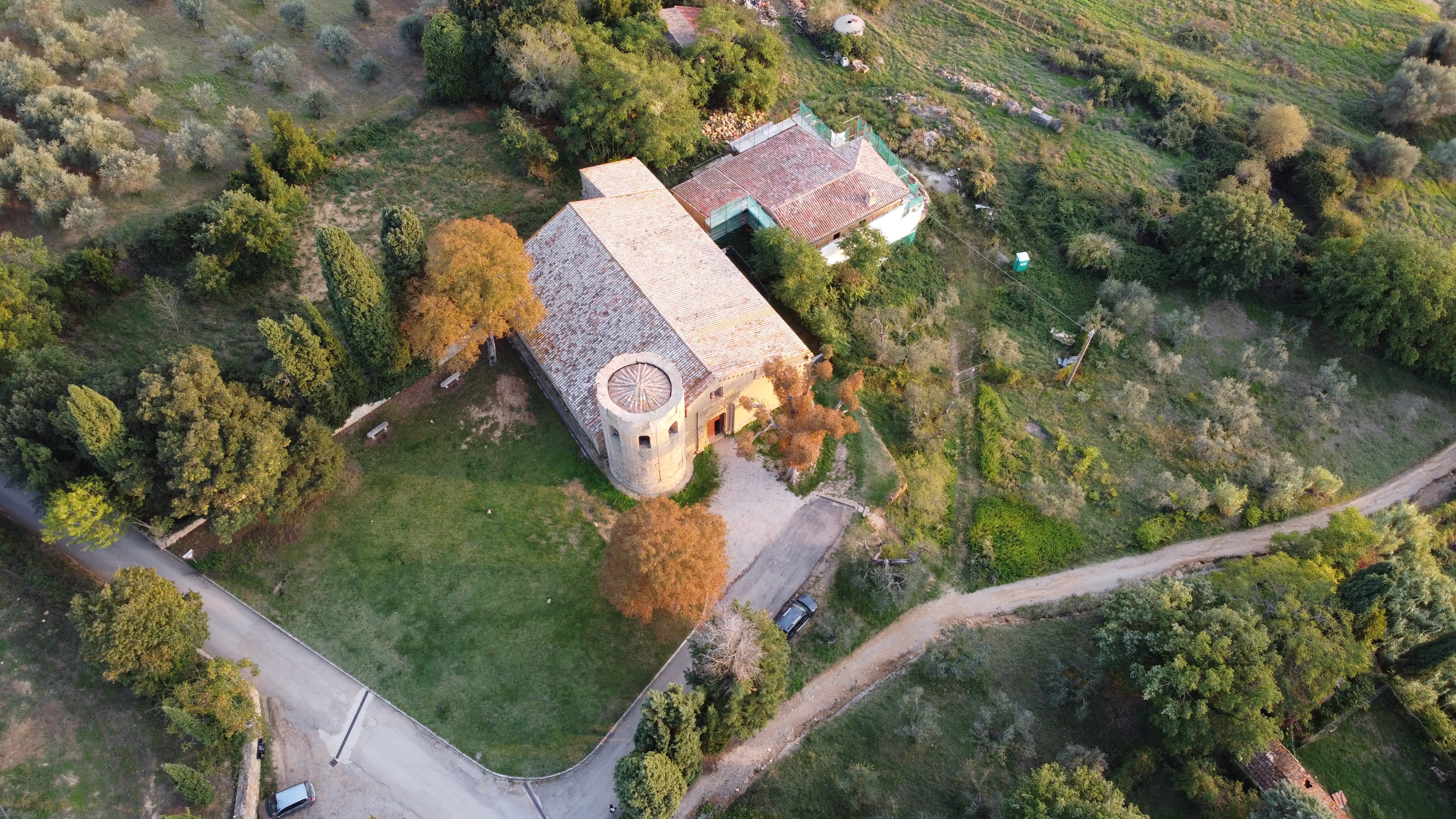
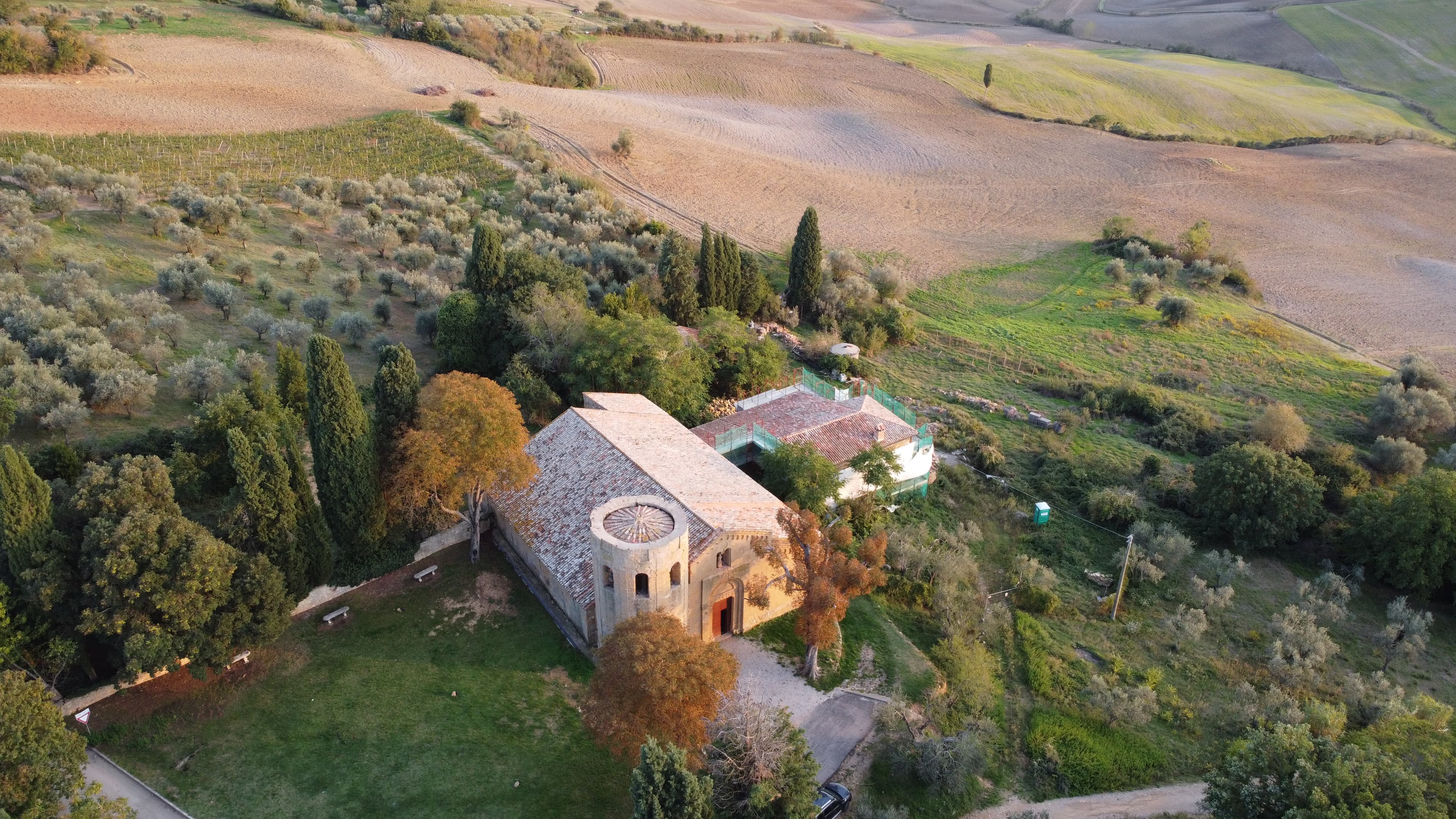
Just outside the walls of Pienza, a path descends through old terraces to a small Romanesque church on a natural ledge above the valley. The Pieve di Corsignano stands in the place that preserves the memory of the older village of Corsignano, before Pius II transformed it into Pienza. It is also one of the quietest places around town: many visitors stay in the piazza and never make the short walk down.
History
The Baptismal Church of a Pope
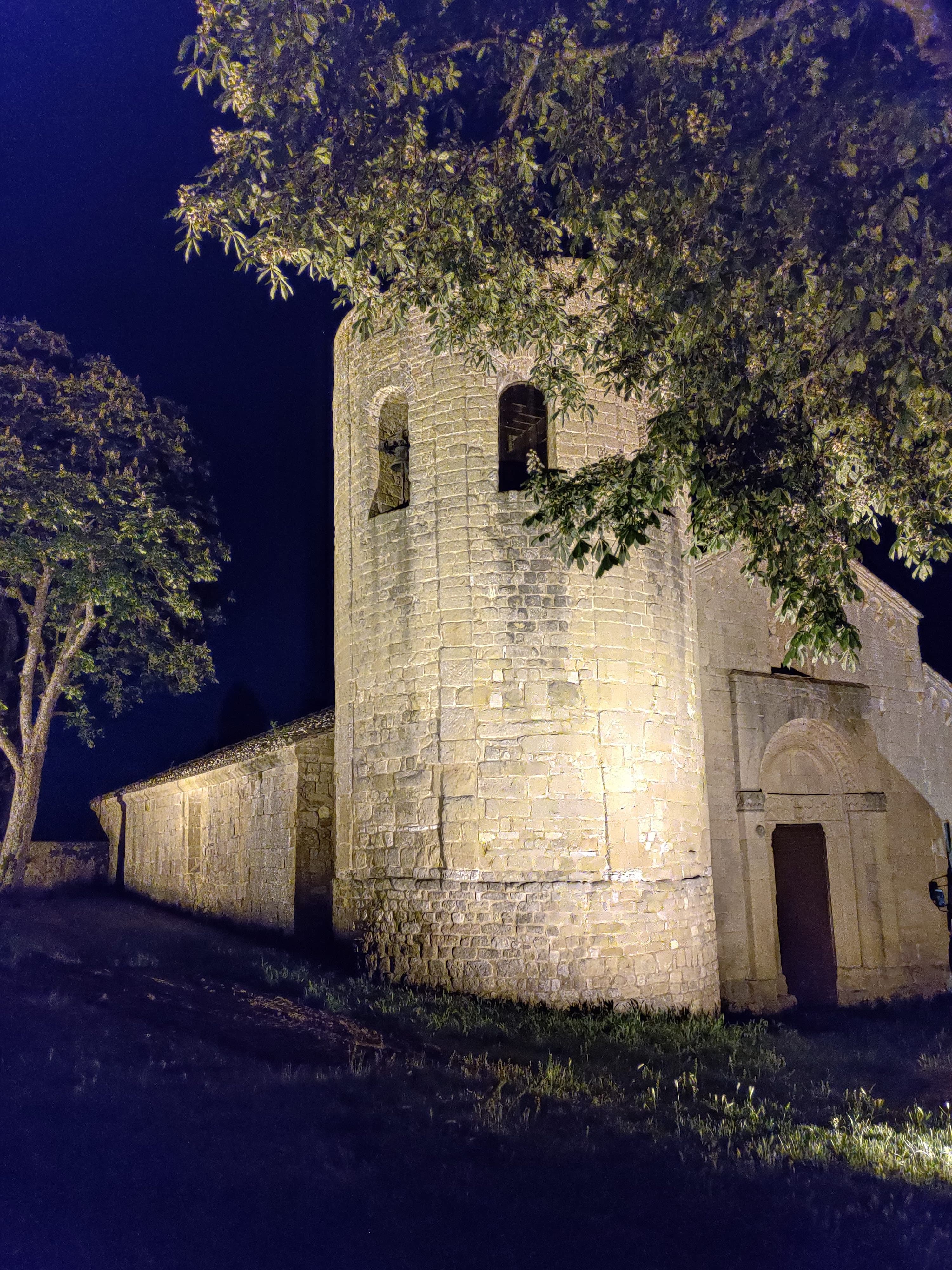
Enea Silvio Piccolomini — born in 1405 in Corsignano — was baptised in this church, as was his nephew, the future Pope Pius III. The present building is Romanesque, with older memories beneath it and later repairs visible in places. The cylindrical bell tower is unusual in this part of Tuscany; the carved portals and sculpted details are the features to look at slowly before entering the plain stone interior.
The View
Looking Out Toward the Gladiator Field
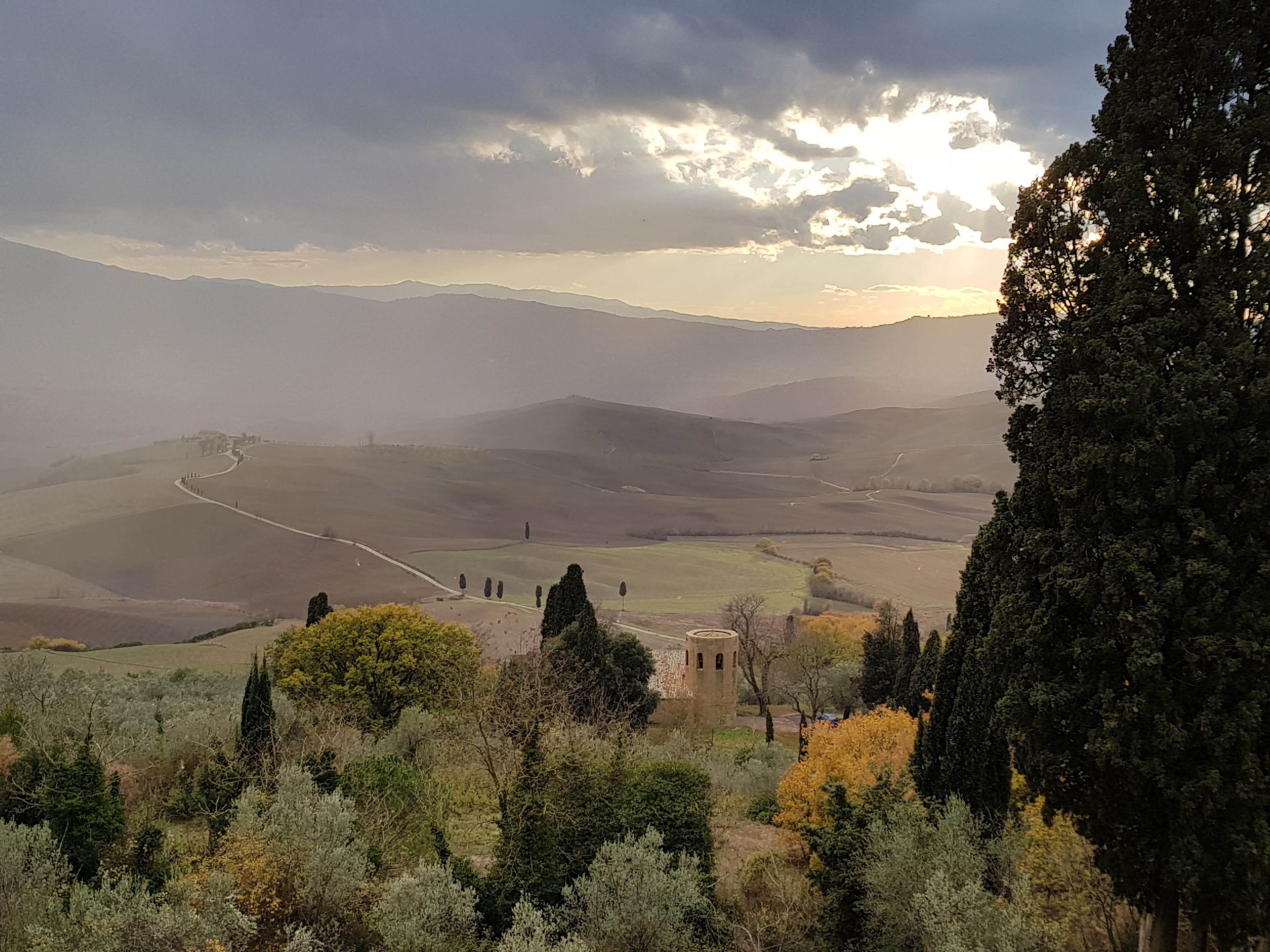
From the ledge beside the church, the Val d'Orcia opens in front of you — south and west toward Monte Amiata and across the farmed slopes below Pienza. It is a good place to understand the relationship between town, pieve and countryside before walking on toward Terrapille. The afternoon light on the facade is especially beautiful.
Visiting
Getting There
From Pienza's main car park (Viale Santa Caterina), walk along the path that descends south-west from the Porta al Ciglio. The church is about 10 minutes on foot (600 metres). The path is unpaved — wear comfortable shoes. The church is usually open during daylight hours; there is no entrance fee. The terrace in front of the church is freely accessible even when the church itself is locked.
Practical Information
- Location
- Just below Pienza, Val d'Orcia, Tuscany
- GPS
- 43.0719° N, 11.6754° E
- Walk from Pienza
- 10 minutes on foot from Porta al Ciglio (600 m)
- Dating
- Romanesque church on an older sacred site; commonly dated between the 11th and 12th centuries
- Entry
- Free — open during daylight hours (variable)
- Best Time
- Late afternoon — light on the facade and across the valley
Gallery
Plan the whole valley
Build this stop into your itinerary
See how to combine Pienza, the Gladiator locations, villages, thermal sites and abbeys without rushing.